With more than 15 years of experience building integrated marketing strategies for B2B and B2C businesses and nonprofit fundraising. She is a marketing nerd who is always learning and looking for ways to collaborate and teach in her community.
Save Time and Budget by Evaluating Your Organic Revenue Strategy
Being an in-house marketing leader means responding to questions about channel metrics, budget allocations, and algorithm trends—and you might not have all the answers at your fingertips.
Especially with the threat of a recession, current and potential customers may be tightening their spending budgets, and you may be feeling the pressure to let your leadership team know you have a good plan.
Even if you have a solid plan for the holiday season and your 2025 budget, you might be asking:
How will we keep customers engaged with our brand and referring their friends to our products or services?
How will we stay competitive and anticipate risks?
How will we stretch the team’s time across current campaigns and research new trends?
Now is the time to evaluate and focus your strategy and make it the best it can be. Here’s how you can use AI and your customer engagement to refine your strategy.
Plan Ahead
Marketing without a plan is a waste of budget, especially when budgets are tight. Planning ahead gives you confidence in how your time and budget are used, and helps you mark progress along the way.
Here are our tips on building an organic growth marketing plan in a strategic way:
Set realistic KPIs: Establish organic revenue KPIs based on historical data, quarterly roadmap opportunities, and your company’s business goals.
Create a Customer-Focused Roadmap: Develop a roadmap that includes a testing budget.
Align with Your Audience, Not Trends: Don’t blindly follow platform trends—connect with your audience and ideal customers. Your customers can tell when you’re trying too hard and not genuinely connecting with them.
Set Organic Performance Metrics: If you don’t have KPIs for organic performance, now is the time to set them.
Evaluate and Update Regularly: Continuously assess customer engagement and use those insights to update your marketing plan. This will provide talking points for monthly and quarterly reporting with leadership. Retaining your marketing budget requires making progress toward your company’s business goals while communicating opportunities for growth and testing.
Here’s an example ChatGPT Prompt you can use to help confirm your priorities and metrics:
“Acting as an [industry] CMO, ask me 3 questions about my marketing [channel] roadmap and performance to help me prepare for the next quarterly business review.”
Evaluate Your Organic Strategy
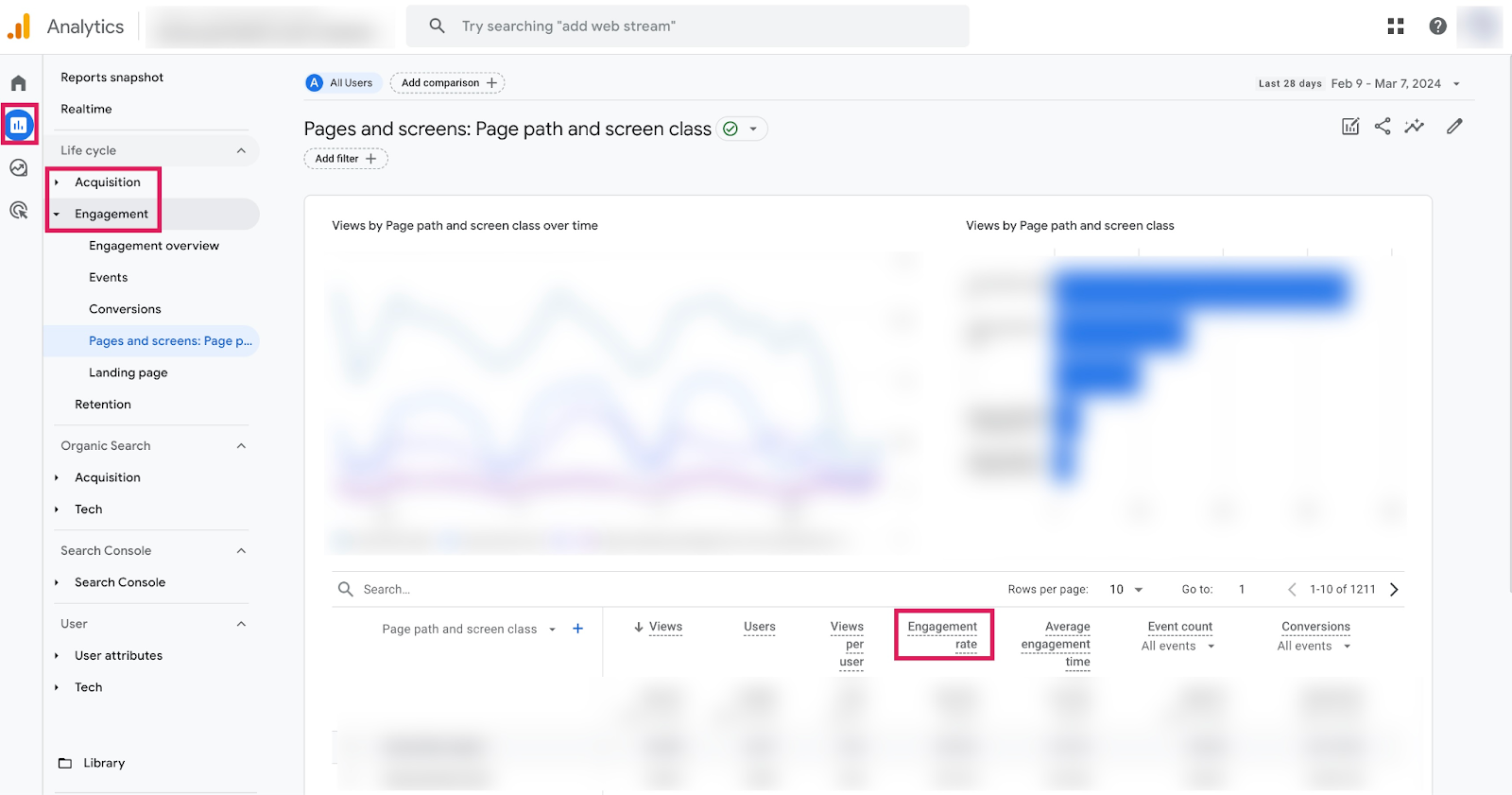
Review your site’s organic search metrics to evaluate what has improved this year and why. Looking at organic revenue, new sessions, engagement rate, and organic clicks. Reviewing the positive metrics, ask:
Did you offer engaging content for your customers?
Did customers find the information or products they needed on your website?
Did your organic engagement and revenue meet your expectations for the topics you prioritized?
You also should assess the parts of your organic strategy where you didn’t see the success you expected and analyze potential reasons for these outcomes. Look at any declines in landing pages or topics for the same time period, ask:
Were we focusing on what our audience wanted/needed?
Did we replicate a strategy or create something new that didn’t transfer as effectively as we thought it would?
Is there a correlation between a decline in one landing page and an increase in another? Did we do something to affect that change? (Update headlines, launch and promote content in another channel, etc.)
Did competition increase?
Do we need more time to test this approach to engaging our customers?
Then, you should take a step back and confirm the intent-based, middle of funnel queries related to your customer’s decision-making process and comparisons, rather than just targeting top search volume queries. You’ll want to evaluate this list in concert with your improvements and declines from the previous months.
You can ask ChatGPT to help with a more efficient evaluation process too:
If you already have a list of intent-based queries, use a prompt such as “Acting as a Content Strategist, map the following search queries to parts of a marketing funnel.” The add your list of queries from your analysis, or from SEMRush and Google Search Console.
Or, if your marketing organization’s metrics and automation tools focused more on user journey stages, you could use a prompt such as “Acting as a Content Strategist, map the following search queries to stages of a buyer’s journey.” Then include the list of queries from SEMRush, Google Search Console or
Consider building a Custom GPT to analyze your SEMRush data set for this project. This will save you time in evaluating your performance on a quarterly basis.
Building on that list of intent-based queries, now you confirm any research you need to prioritize (SERP analysis, surveys, user research, or SEO testing) to validate these assumptions about search intent and confirm your strategy further.
Align Your Organic Strategy with Your Customer’s Search Journey
It’s important to keep in mind that as marketer’s we are biased. We are campaign messaging and query focused. Sometimes we forget that a customer journey takes time and rarely a direct path.
If you don’t already have a search journey mapped out for your product or service, we recommend use this exercise as a reminder of your ideal customer’s decision-making process. Your account management and sales team would be great resources for information throughout this process. And if you already have a search journey as part of your marketing plan, it’s always good to revisit and validate it’s still relevant.
Example ChatGPT Prompt to help identify key decision points: “Acting as a [persona, e.g., new trail runner], help me identify the steps I should take when purchasing a new pair of shoes.”
Remember, not every customer will follow this path exactly—this exercise is designed to help you think through the questions they might ask, the comparisons they make, and the platforms (Google, YouTube, TikTok, Websites, Email, etc.) they may interact with during their decision process. You need to use your human brain to layer your own brand and competitor knowledge on top of any user journey steps ChatGPT might call out.
As part of this process, list 2-3 questions that correspond with each stage of the customer journey, such as:
Awareness Stage: What features should I look for in trail running shoes? What brands are most recommended by experts?
Consideration Stage: How do different shoes compare in terms of durability and comfort? Are there any deals or discounts available for the brands I’m interested in?
Decision Stage: Which retailer offers the best return policy? Can I find customer reviews from people with similar needs?
After mapping out the journey, confirm which search queries are already part of your strategy and prior evaluation and should remain in focus going forward.
Are there any gaps in your current strategy? Any new questions or pain points your potential customers are experiencing? Are there ways the query or pain point might change if the financial market shifts dramatically?
Keep this customer journey and the list of questions, pain points, and comparisons handy for future reference so your strategy remains aligned with your customer’s needs.
Build Your Roadmap
All of this analysis and data can lead to overwhelm. As a reminder, you need a plan to achieve success in reaching your customer engagement goals. That means you need to choose one priority topic, for now, and break it down into manageable projects.
Referencing your list of queries and pain points, select one topic that highlights a gap in your current marketing strategy, which you can focus on this quarter. Break this topic down into at least three to five sub-topics that can be developed into unique content pieces.
Example ChatGPT Prompt to refine these subtopics:
“Acting as a Content Strategist, help me break down the topic of ‘best waterproof trail running shoes’ into three new content pieces I could write. You can also ask questions about the audience persona to tailor these subtopics even further.”
Once you have subtopics you can add to your editorial calendar, you should consider the appropriate content format—whether it be a guide, a blog post, a social media series, or short videos—based on your knowledge of your audience’s engagement behaviors. It also doesn’t hurt to plan how you could repurpose content across channels as part of a campaign (e.g. promoting a guide on social, referencing blog post content in videos, etc.). It’ll save you time and potentially reach more
Next, identify ways to share the mid-funnel content after it’s finished. Can you partner with the sales team? Can you partner with the social media team?
Stick With It, Test, and Learn
A critical part of evaluating your organic performance is setting realistic goals in the first place then testing. After evaluating your current performance and identifying priority topics that align with the critical decision points in your customer’s journey, you should confirm the metrics you’ll use to evaluate performance going forward.
Set data-backed SMART goals for your organic performance:
Good example: 10% YoY increase in organic revenue from the Running Shoes content hub.
Bad example: Double revenue from our running shoes product pages.
Break the goal down by quarter:
Good, realistic example: 10% YoY increase in organic revenue from the Running Shoes hub, by developing and promoting a new guide each quarter to support a runner’s seasonal buying journey and build trust in our brand.
Bad, unrealistic, irrelevant example: Double revenue from our running shoes product pages, by writing 15 new blog posts linking to product pages each quarter.
Proactively share your goals and milestones with your manager or your executive team. This way they know what you’re focused on and what resources you might need. An added benefit: they are less likely to set their own expectations.
We’ve all heard those expectations that give us anxiety (rank #1 in 3 months, reach 1 million followers, double organic revenue this quarter). Get ahead of those and help your leadership team know the potential and value of long-term impact. If they want results “yesterday,” organic revenue is not the channel they should be investing in.
Get testing! Not every new piece of content will yield immediate results, but testing is valuable for long-term growth. Focus on content that drives long-term revenue impact. Short-term gains may require a shift toward paid media strategies. As you experiment and gather insights, share your findings with other leaders in paid media, social media, sales, and other relevant departments.
Ask for Additional Support
If you need support in content strategy or SEO ideation, testing, or implementation, we’d be glad to work as an extension of your team. We love setting and achieving organic strategy goals and sharing tips on how we’re using AI to make our marketing strategy implementation more efficient.
We’d love to take some work off your plate. Get in touch and we’d be glad to complete a complimentary review of your organic strategy and help you prioritize what’s next for your brand.